
![How yoga can support healthy habits to keep you regular. Constipation may not be your favourite topic, but it is very common. It seems that a lot of us have […]](https://yogabyclare.co.uk/wp-content/uploads/2026/04/Blog-April-26-698x442.png "Yoga for Better Bowel Health")
How yoga can support healthy habits to keep you regular.
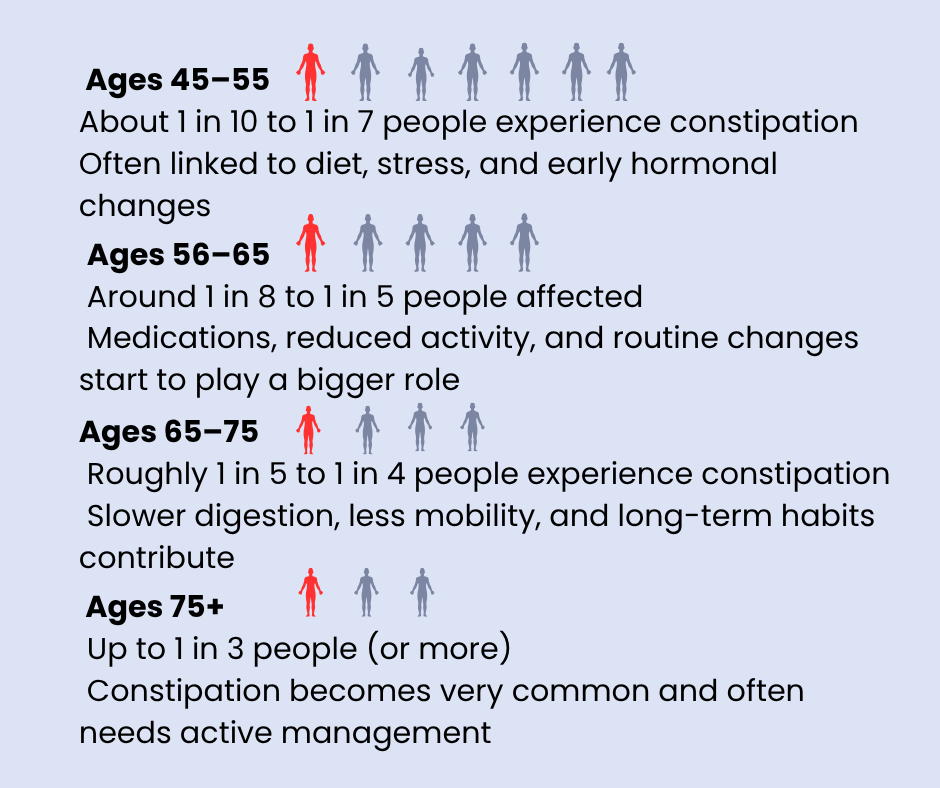
Constipation may not be your favourite topic, but it is very common. It seems that a lot of us have concerns about our bowel health. Around one in seven adults in the UK are affected by constipation at any one time, and it becomes more common with age. Women are also affected about twice as often as men.
The NHS describes constipation as going less often than usual, or fewer than three times a week, often with hard, dry stools, straining, or a feeling that the bowels have not fully emptied.
In Ayurveda, healthy elimination is considered to be once daily, preferably in the morning, without effort and preferably without the stimulation of food.
But whatever your habits, constipation is anything that is different to your normal routine that makes it more difficult to go to the loo.
Our lifestyle affects our bowel health
Diet
For thousands of years, our diet consisted mainly of hard fibrous foods like seasonal fruits, nuts, seeds and vegetables along with fresh meat and fish. This meant our digestive system had to work harder to separate nutrients from waste, and it became well adapted to a fibre-rich diet
These days it’s easy to grab soft, low fibre and highly processed foods that are heavy on sugar, soft to eat and designed to keep you coming back for more. Add to that we find ourselves pulled in all directions, with no time to cook, and it’s not surprising that many of us simply don’t consume enough fibre to keep our bowels busy.
Fluid intake
If your body is not getting enough water, your colon takes a thrifty approach and absorbs more of it from your poo. That leaves things dry, hard, and stubborn. Not exactly the sort of consistency anyone hopes for.
Movement
Your bowel is more than capable of managing elimination through wave like muscle contractions called peristalsis but it does enjoy a little encouragement. Regular walking, stretching, and general activity help to exercise your bowel.
These days, many of us sit down a lot, whether that is because of work or that we seek more sedentary activities as we get older. The more we sit, the more likely we are to be constipated.
Resisting the Urge
We all do it! Hold onto our poo because we are busy, out and about, can’t find a clean toilet, in a meeting … Our excuses are endless. But research shows that the longer our poo stays in our bowels, the dryer and harder it becomes. Ouch!
Routine
Like most bodily systems, our digestion enjoys regularity. Modern life can make it difficult to eat, sleep or poo at consistent times, and all of these affect how comfortably we can eliminate waste.
Health and Medications
Painkillers, iron supplements, some antidepressants, certain blood pressure medicines, and others can all make constipation worse. If constipation has become a new problem, it is worth reviewing medications with your healthcare professional. Physiological conditions like pelvic floor dysfunction can also lead to symptoms of constipation.
Chronic Stress
Stress blocks all of our systems and also means that we often don’t take care of ourselves as well as we should. Our digestive system works to a daily rhythm. Even while we sleep, our body is processing food, which is why many people feel the urge to go in the morning.
When we are continuously in ‘fight or flight’ mode, our sleep is affected, disturbing our overnight cleansing cycle. No wonder stress is a factor in irregular bowel movements.
The habits that secretly make things worse
Usually no single thing makes us constipated. It is caused by a thousand tiny unhelpful choices that build a very determined traffic jam.
Our daily choices affect our bowel health: sitting for long periods, skipping meals, eating too much or too little, ignoring the urge to go, drinking mostly tea or coffee but not much water, relying heavily on processed foods, being overly cautious about using the loo away from home, stress, worry, and rushing through the day
Our digestive system likes daily rhythm, warmth, movement, and calm. It does not enjoy being ignored, rushed, or fed a diet of processed food and anxiety.
Change your habits, change your bowel health!
Whilst there are many effective ‘over the counter’ aids to relieve constipation, we need to consider the long term. Your bowel usually responds best to steady, repeatable actions that create healthy habits over time.
1. Add fibre to your diet
Make one small change everyday:
-
- Start your day with oat porridge, a few nuts and seeds and a warm drink.
-
- Choose wholegrain bread and cereals
-
- Add beans, lentils, chickpeas to lunch
-
- Eat fresh vegetables such as carrots, broccoli, and greens
-
- Snack on fruit such as pears, berries, prunes, apples or seeds like chia and flaxseed
Remember that our insides function best when they are warm and moist. This means that cooking food makes it easier on our systems to digest and get the most from the food that we eat.
2. Stay hydrated
Drink plenty, and ensure that you include moisture rich foods in your diet, like soups, stews and casseroles. Fluid can come in the form of yoghurts, custards and kefir as well as water.
Life thrives in warm and wet conditions, just like the inside of your body. Taking sips of warm drinks like herbal teas throughout the day is a good way to stay hydrated and keep your digestive fire burning.
3. Start moving
.A daily walk, some gentle stretching, a bit of housework, gardening, dancing around the kitchen, or yoga can all help stimulate the gut.
Do just one thing for 5-10 minutes everyday.
4. Just go!
When your body tells you that it is time, just go! Try to go at a similar time each day if possible, especially early in the morning or after breakfast, when the bowels often become more active.
5. Chill out
The old chestnut about creating a relaxing bedtime routine to settle your mind and body. That way it can do its night time cleaning job happily, leaving waste ready to go in the morning. Eat your last meal 2-3 hours before you go to bed and keep it light. Try to switch off screens at least an hour before you sleep, and go to bed at a regular time. How about reading, journalling, meditating or some gentle yoga instead?
Sitting on the Loo!
Before the invention of modern toilets, we used to poo squatting down, and our system is designed around this shape to work at its best and most efficiently. Now to save you rushing to replace your loo with more continental arrangements, try resting your feet on a small stool(!) or even a couple of toilet rolls. That will put your abdomen in a more natural position and help elimination.
Did you know that your breath plays a role in how easily you can open your bowels? When you inhale, your diaphragm moves downwards, creating gentle pressure in your abdomen. At the same time, your pelvic floor responds and can relax, helping the bowels to empty more easily.
Holding your breath and straining can actually make things worse, increasing pressure in the wrong way and making it harder to go. So if you feel a little stuck, try to relax and breathe in and out slowly and deeply.
When to get checked
Occasional constipation is common, but it should not be brushed off forever. It is important to speak to a doctor if constipation is new, persistent, painful, or accompanied by weight loss, bleeding, vomiting, a swollen abdomen, or changes in bowel habits that do not settle. Sudden constipation in an older adult deserves proper attention, especially if it is a change from normal.
If you are worried, or your habits have changed, go to your GP.
Take the test. The NHS offers FREE bowel screening every two years to all adults between the ages of 50 and 74. People aged 75 plus can request a screen through their GP. Do it! It saved my partner’s life.
For more information, go to:
https://www.nhs.uk/tests-and-treatments/bowel-cancer-screening
And finally …
Yoga for a healthy gut
Yoga is for life! So there are lots of yoga shapes that can help to keep our bowels healthy. This short practice shows you a few, and you don’t need to have practiced yoga before, or even have a yoga mat to try them.